






The FREIGHT RAILWAYS fear further increases in track prices
Jun 4, 2024 at 7:17 PM
VAHLE Receives Major Contract for Port Electrification in Abu Dhabi
Jun 5, 2024 at 7:25 PM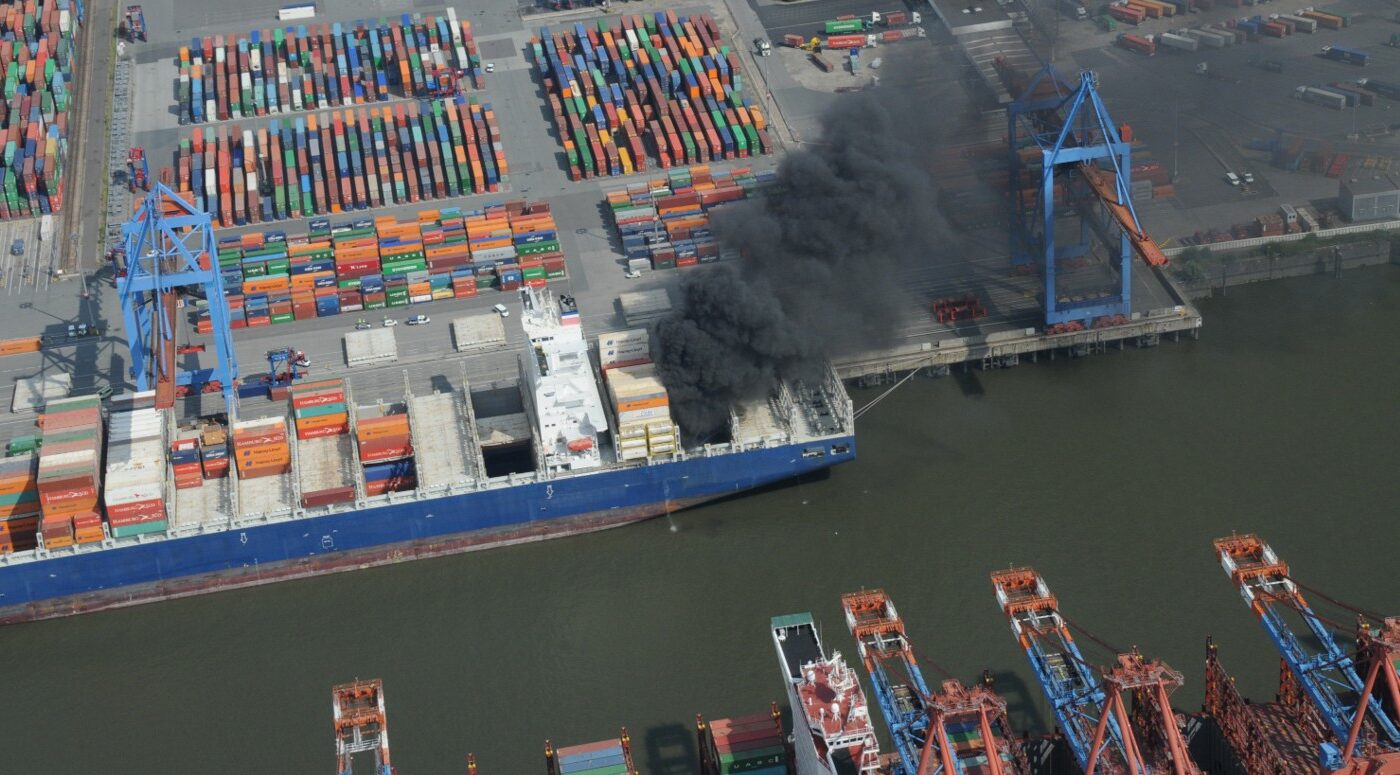
The Water Police Hamburg has introduced a digital model that systematically detects undeclared hazardous goods using Artificial Intelligence (AI). This marks a milestone for increased safety in the Port of Hamburg by the responsible authority. The technical implementation was carried out by the IT software company DAKOSY. The project, funded by the InnoTecHH Fund, started in January 2023 and was transitioned to regular operation at the end of April 2024.
The new digital application generates recommendations for containers to be inspected in import and export using algorithms. Based on the suggestion lists created by the AI, the water police officers check the identified cargo units.Lutz Dreyer, head of department at the Water Police WSP 52, Central Hazardous Goods Monitoring, names the triggers for digitalization: “Previously, inspections were conducted manually and were only possible on a random basis due to the high number of containers.” A specialized analysis in 2021 showed that incorporating intelligent methods, particularly from the field of Artificial Intelligence (AI), could significantly improve and make the search for undeclared hazardous goods more efficient.“We started the AI project in early 2023 with financial support from the InnoTecHH Fund of the Hamburg Senate Chancellery and technical support from DAKOSY,” says Dreyer. To systematically identify undeclared hazardous goods, the authority initially needed digital access to all export and import shipment information for the containers handled through the Port of Hamburg. This information is available in the Port Community System (PCS), which is operated by DAKOSY.
Import and Export Data Integrated into the Hazardous Goods System
By the end of 2023, the import data and by the end of April 2024, the export data from the PCS were integrated into the digital hazardous goods information system (GEGIS) of the Water Police and trained with AI. “The shipments were marked with a probability factor for undeclared hazardous goods and checked by us,” explains Dreyer. Thilo Buchheister, who leads the project for DAKOSY, adds: “We use a deep learning model for the automated, regular training processes, allowing us to incorporate new aspects, such as additional product descriptions, into the analysis.”
Revision of the Hamburg Port Security Act
The basis for the AI project was established by the revision of the Hamburg Port Security Act. Only through this law is the Water Police authorized to process cargo data to determine whether undeclared hazardous goods are loaded or unloaded in transport units at the Port of Hamburg. Previously, the Water Police lacked the legal basis to systematically inspect containers that were not declared as hazardous goods.Olaf Hagenloch, deputy head of the Water Police Hamburg, recalls a tragic event in this context: “Many of us still remember the severe fire on a container ship in 2016, when numerous emergency services tried to extinguish the fire on board for several days. The cause of the fire was undeclared hazardous goods. This shows how important it is to declare hazardous goods for safe transport. With the support of AI, my colleagues now have an innovative tool that significantly increases both their own safety and the overall safety of the port. I am very grateful for that.”
New Quality of Hazardous Goods Transparency
Overall, the newly created framework conditions and innovative IT technology in daily operations enable a new quality of hazardous goods transparency. Dreyer considers the project goal to be achieved: “We have a continuously learning AI system in our GEGIS. As a result, we receive good suggestion lists that allow us to efficiently and time-saving detect undeclared hazardous goods. With the help of automated training runs, our data base is continuously and currently expanded.”
Photo: © Polizei Hamburg / Image caption: The fire on the CCNI Apauco in the Port of Hamburg in September 2016 has contributed to making the detection of undeclared hazardous goods in the Port of Hamburg a higher priority.


