Deutsche Telekom Supports AutoLog Project in Emden Port
4. August 2024
Is Intercontinental Freight Transport Outdated?
4. August 2024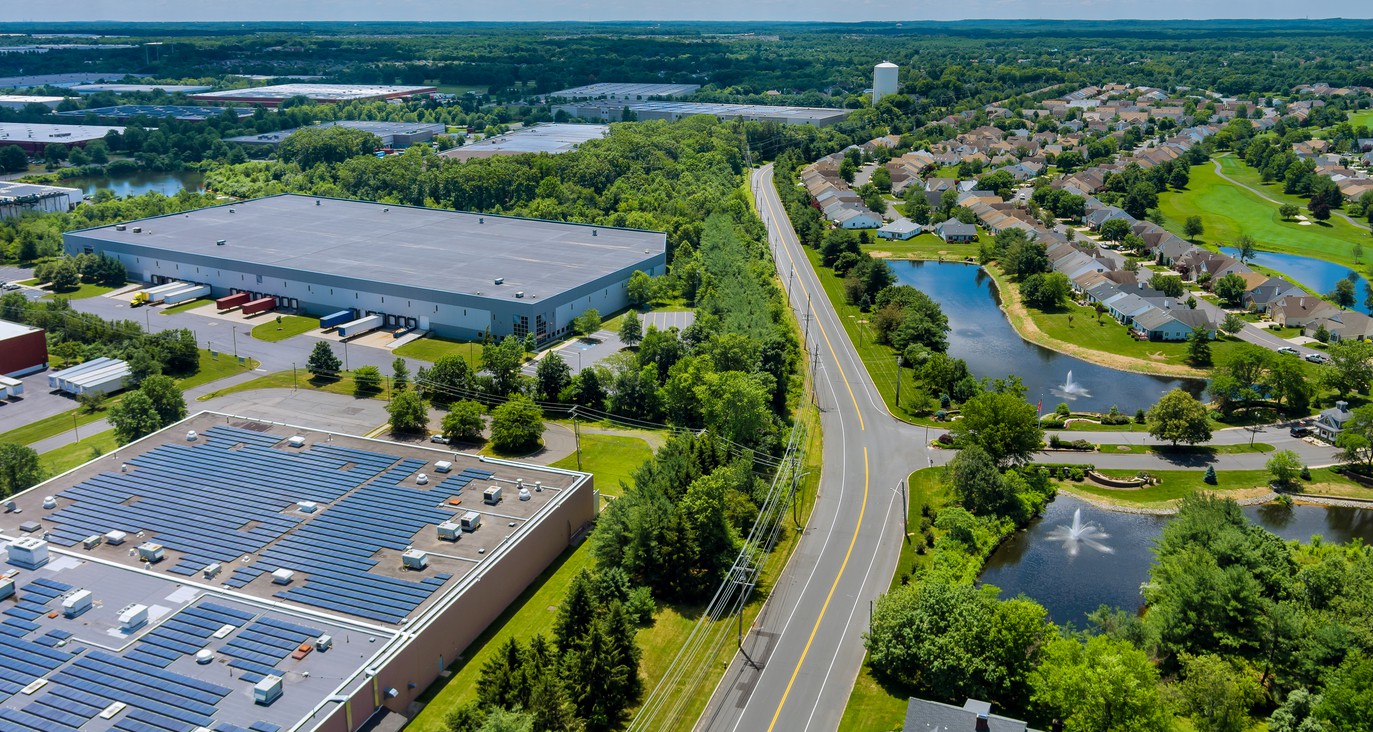
PrimeVision, a company in the field of computer vision integration and robotics for logistics and order processing, with tips for a sustainable warehouse operation. Sustainability in warehouse management has become a top topic in recent decades. Limiting operational environmental impacts is a complex task that can be addressed through higher process efficiency – often through warehouse automation.
(Delft) Efficient, automated processes save energy, reduce emissions, and enable more compact facilities. By collaborating with an automation partner that explicitly prioritizes sustainability, the benefits can be maximized. A good starting point for greater sustainability is the warehouse building itself. PV systems, modern thermal insulation, and green electricity can significantly reduce the operational CO2 footprint.
The right location is also important. Mega-warehouses in nature reserves are unacceptable for ecological and aesthetic reasons, but logistics is also a consideration:
To minimize environmental impacts and traffic congestion, compact warehouses in urban locations with good transport links to the delivery area are optimal. Sustainability also applies to working conditions: The days when warehouse staff had to carry heavy loads over long distances are thankfully almost over. Today, robots and other handling systems take on heavy and health-damaging physical work, contributing to job satisfaction. These sustainability goals are generally achievable, but addressing industry-specific challenges can also make warehouse operations more efficient to further reduce environmental impacts.
Returns Present Warehousing Facilities with a Sustainability Problem
Everyone buys clothing and fashion – and increasingly online. In stores, the chosen outfit can be tried on easily in the fitting room and returned if it doesn’t fit; in online retail, the fitting happens at home, presenting warehousing facilities with a huge sustainability problem: a flood of returns.
According to estimates, more than one-fifth of all clothing ordered online in the UK is returned. In the USA, a logistics company reported that the CO2 costs for returns in online retail correspond to the emissions of 3 million cars.[1]
Returns are a significant challenge for online retail because a large volume of products flows against the normal shipping process. First, the item must be returned to a distribution center (often at a different location than the origin) – with the corresponding transport emissions. Subsequently, the products are identified, checked, and sorted in labor-intensive manual processes. The resulting traffic generates additional CO2 emissions. If a product cannot be recycled or resold, it ends up as unnecessary waste in a landfill. In the age of unlimited free returns, all these processes also mean significant additional costs for providers.
Clearly, there is room for improvement here. Moreover, higher process efficiency is desirable for every warehouse operation, not just for handling returns.
Automation is the Key to Greater Efficiency
Automation is the key to greater efficiency and thus also to more sustainability. To stay with the example of returns: when computer vision systems check items in the shortest time, robots transport them to the appropriate areas for resale or recycling, and analytics software identifies trends and improvement potentials, it significantly accelerates processes and makes them less labor-intensive. If the automated systems are powered by renewable energy, this is an extra bonus for sustainability.
Automated warehouse processes allow for faster order fulfillment and return processing in a smaller space. Savings in emissions and energy consumption also reduce operating costs. Sustainability goals can thus be achieved at all levels of the operation. Those who find the best possible solutions for this maximize their business advantages.
Robots are a Core Element of Warehouse Automation
Prime Vision is not only working on solutions for efficient, sustainable warehouse operations but also on improving the ecological balance of the solutions themselves.
Robots are a core element of warehouse automation, but they are also complex devices that are costly to manufacture. For this reason, Prime Vision is concerned with the impacts of maintenance. Repairing is fundamentally more sustainable than purchasing new; however, when a robot has definitely reached the end of its life, Prime Vision repurposes as many parts as possible: high-quality parts are integrated into other robots or used for in-house research – this is effective component recycling. During inspections, inferior components are identified and sorted out, ensuring that robots are only equipped with flawless parts.
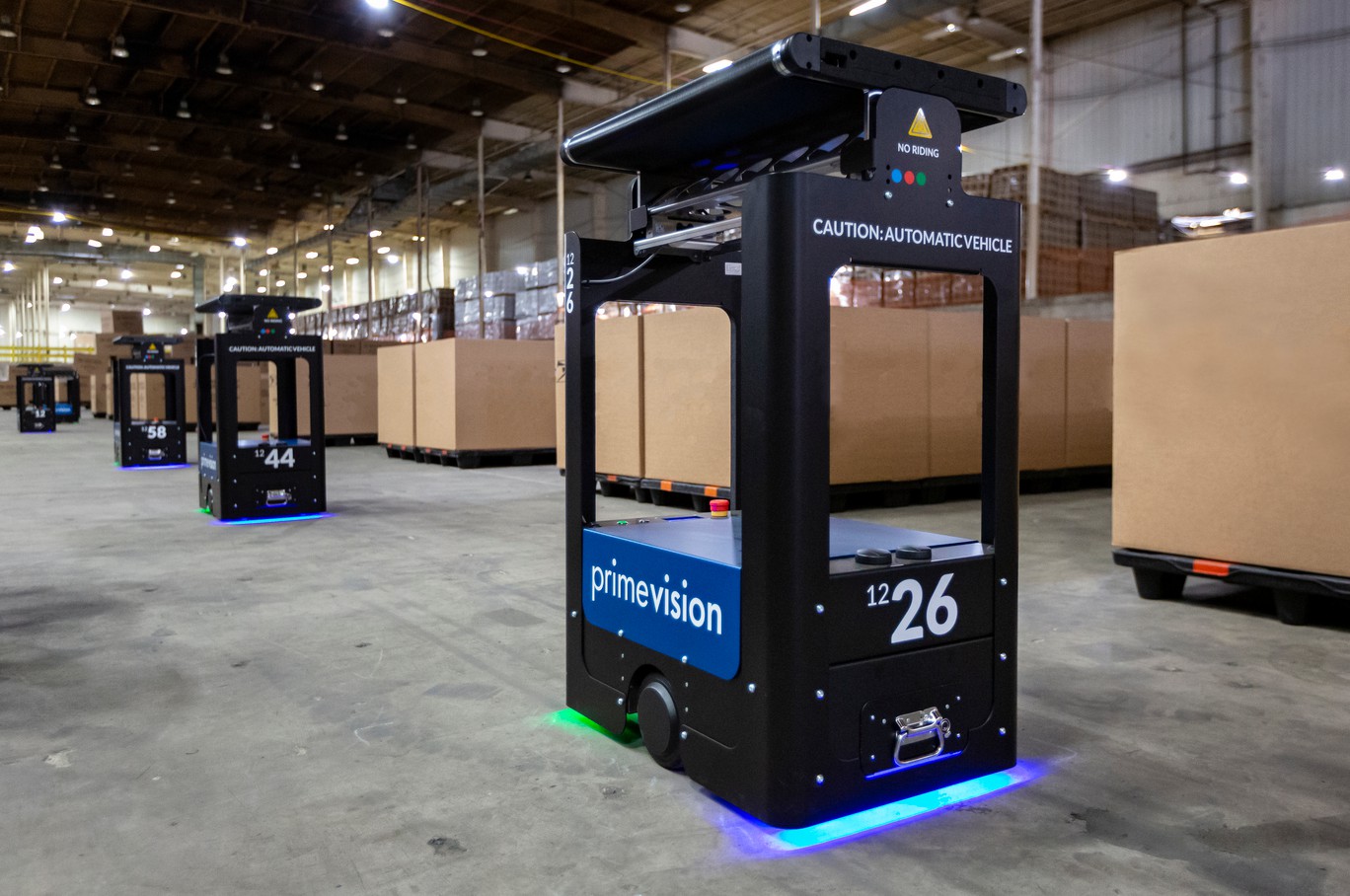 Prime Vision maintains repair facilities close to customers, ensuring that spare parts and maintenance personnel are quickly on-site – without long transport routes and excessive CO2 emissions. Another focal point is the software: it can be maintained remotely, so no personnel need to travel for updates. Prime Vision continuously works on further optimizing the software to make it more efficient and reduce the number of servers needed. Prime Vision also analyzes the hardware and helps the customer consolidate the computing power of their facility in an optimal, well-monitored space to maximize energy savings during installation and operation.
Furthermore, Prime Vision is working with new IT developments such as hyper-converged infrastructures. Such cloud solutions are characterized by high scalability and efficiency, making a large portion of on-site servers unnecessary. Customers can thus reduce their infrastructure without sacrificing flexibility.
The Right Partner is Key
For the sake of the planet, the entire supply chain must work together for the most sustainable logistics possible. This also applies to the collaboration between warehouse operators and their automation partners. Higher process efficiency through robots, computer vision, and analytics software can significantly reduce the CO2 footprint of warehouse operations – but what about the provider itself?
[1] Buy. Return. Repeat … What really happens when we send back unwanted clothes? – The Guardian
Photo: © PrimeVision