ASTAG Reminds of Upcoming Cost Increase for 2025
23. August 2024
Is DB No Longer Allowed to Offset the Losses of DB Cargo?
25. August 2024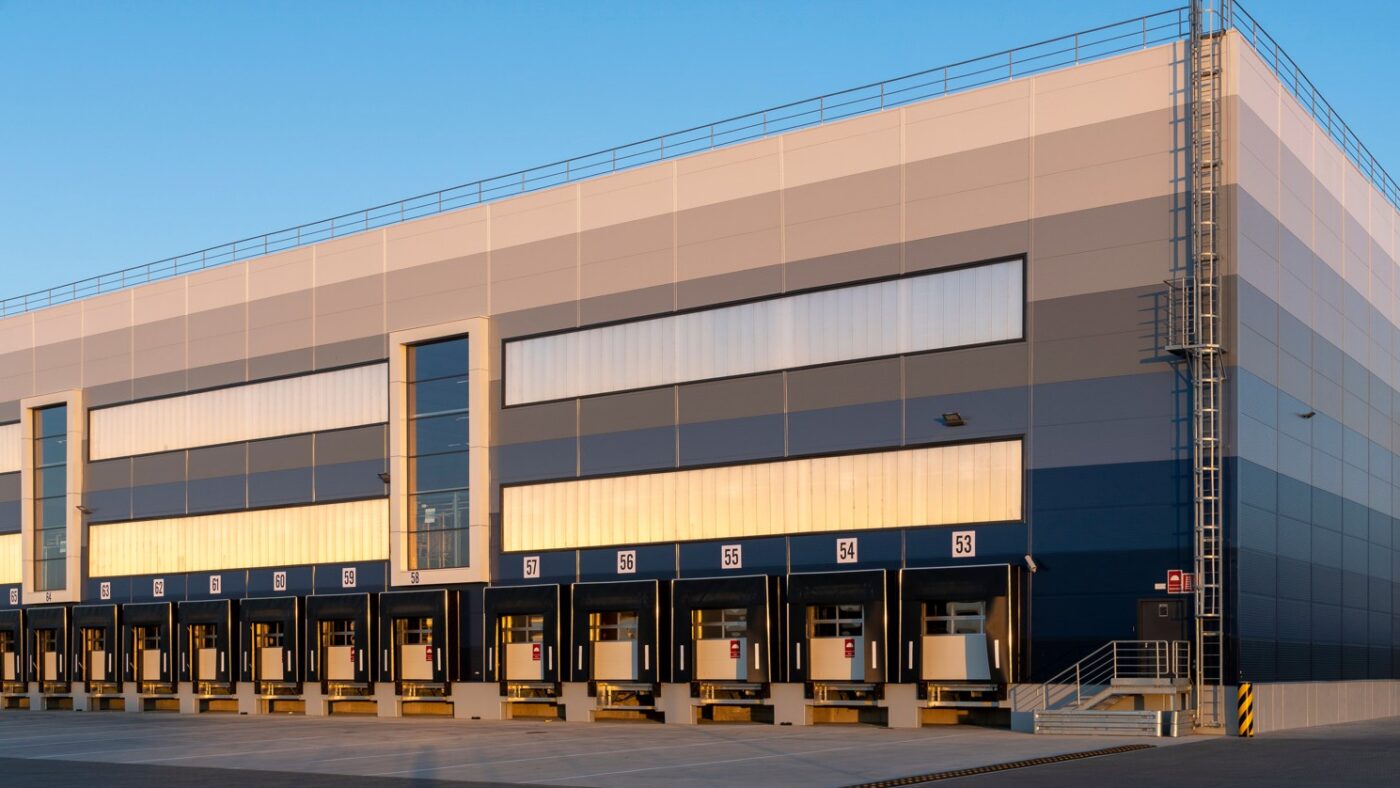
The LBS – Bavarian Freight Forwarders Association e.V. advocates for honest acceptance of spaces and transport that economically and sustainably supply our society. The LBS aims to initiate discussions about the increased demand and future-oriented quality of logistics properties even before the Expo Real in Munich.
(Munich) Urban spaces and transport routes are undergoing transformation, the digital shift is revolutionizing the relationships between trade and customers, and logistics chains are being reshaped: However, the areas where these changes are supposed to take place are far from sufficient to develop future-proof and resilient solutions. The LBS – Bavarian Freight Forwarders Association e.V. points out this shortcoming. “Logistics, as the fourth largest sector of the German economy, needs reliable design and development opportunities for its work,” explains LBS Managing Director Sabine Lehmann. “The current conflict between free goods movement, convenience, and customer supply security, as well as space and transport, must evolve into a constructive coexistence.”
Focus on ‘Disturbing Factors’ Leads to a Dead End
The fact that logistics establishments face rejection due to the associated space requirements, the unavoidable noise and light emissions during operation, and traffic volume is increasingly causing headaches for the industry association and its member companies. “Businesses can no longer settle or expand where they are needed and can be operated economically and efficiently, but rather where they supposedly disturb the least,” notes Lehmann. “This would not be accepted for hospitals or schools, but in the supply of everyday necessities, the self-evidence of short distances quickly fades from view.” The same applies to the supply of companies with raw materials and semi-finished goods, as well as the transport of products: “Made in Germany also means logistics in Germany.”
‘Even Cargo Bikes Need Handling Areas’
As an example of contradictory developments in planning, settling, and utilizing logistics properties, the LBS cites aspects of resource conservation, sustainability, and climate protection. On one hand, urban supply traffic is deliberately made unattractive, while on the other hand, the integration of micro-distribution centers in the (re)planning of neighborhoods is still too often neglected, instead being “shifted outside.” “Even distribution by cargo bike is not feasible without handling areas if distribution warehouses are located far out on the periphery,” says Lehmann. The area needed for storing, transporting, and distributing goods is the same under all circumstances; it is just distributed differently: sometimes a business model provides for storage at the producer, sometimes at the retailer, sometimes in logistics. “The situation is quite different for transport routes: The further apart the distribution points are and the less optimally they are placed in the network, the longer the routes to be traveled to bridge the distance from manufacturers to consumers, resulting in increased traffic volume.”
Overall Consideration Leads to More Sustainability
For the LBS, it is clear: “In the interest of short distances and lower environmental impact from operations, we need intelligent solutions that consider and weigh all factors equally. These solutions can be precisely determined based on concrete metrics.” This is particularly true for sustainable overall calculations: Logistics spaces are ideally suited for the operation of large-scale PV systems due to their size and development. Thus, the industry association states, the economic benefit is inextricably linked to the ecological benefit.
Demand is Clearly Visible and Growing
All currently available data and forecasts indicate that an increase in goods and freight transport can be expected in the foreseeable future. “The digital shift supports service providers in planning and optimizing traffic flows. But the areas where refrigerators from Hanover are transshipped on their way to customers in Chiemgau, or where Italian marble is distributed to hardware stores in Franconia, cannot be represented in virtual space,” emphasizes Lehmann, highlighting the need for logistics spaces. Especially in the resource- and environmentally optimized piece goods transport, which bundles many shipments in one transport, sufficiently large handling areas near end consumers are crucial for sustainable processes. The other option, many small, only partially utilized transports, would have the opposite effect: more vehicles, more traffic, more resource consumption, more emissions.
Division of Labor Requires Logistics
The societal upheavals that would arise if exclusive short-distance logistics for goods from local production were the answer to future questions would consequently lead to a demand for cultivation, dismantling, and manufacturing areas that would far exceed the need for logistics spaces – and that would bring their own burdens. “Not to mention many products that are not available or can be produced here, from crude oil to sea fish, from silicone to laptops. Their transport is the unchangeable prerequisite for demand-oriented availability.” A division of labor economy, according to the LBS, is not feasible without smooth logistics, just as Germany’s and Bavaria’s position as export powers is. Just as every household has a basement, an attic, or a refrigerator as a handling place between “storage” and “use,” logistics needs sufficient spaces for the same purpose, the association emphasizes.
Acceptance Also Required Outside the Professional World
“In less than two months, the EXPO REAL will take place again in Munich, one of the most important real estate fairs in Europe. The LBS takes this as an opportunity to initiate discussions about the increased demand and future-oriented quality of logistics properties even before the event,” says Lehmann. “The topic is too multifaceted and has such sustainable impacts that it requires a broad public to develop reliable concepts in a timely manner beyond the professional world – and to create acceptance for it.”
Photo: © Loginfo24