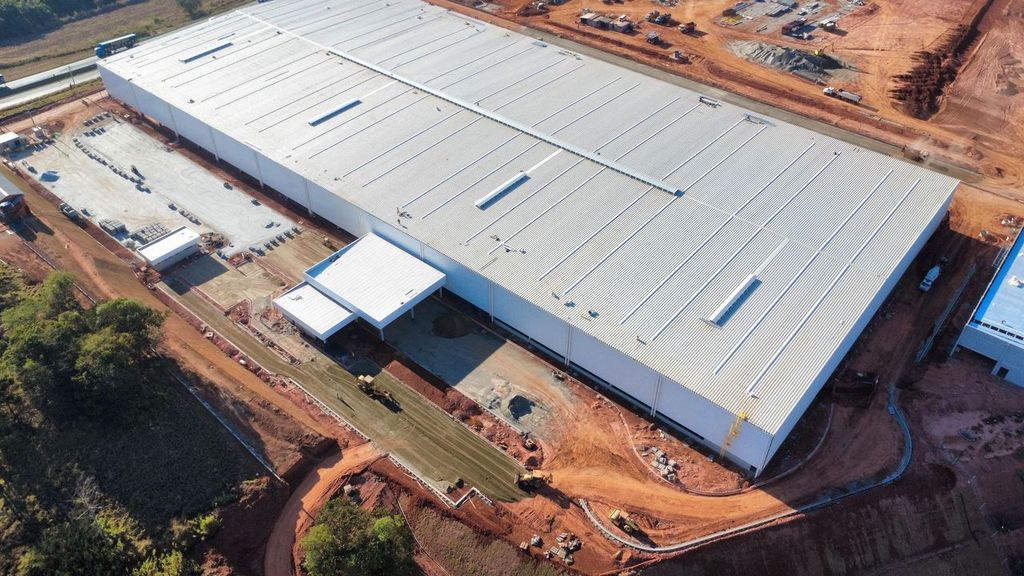
Fiege builds multi-user logistics center in Borna
19. November 2024
Circular Economy in Logistics and Transport
21. November 2024
The DHL Global Connectedness Tracker measures international activity relative to national activity on a scale from 0% to 100%. The current value of 25% indicates that globalization continues to operate at record levels despite geopolitical tensions and uncertainties. At the same time, the value highlights that the world, despite decades of globalization, is far from being fully connected.
(Bonn) Trends in globalization and world trade can be examined by region, individual countries, and geopolitical orientation using the new DHL Global Connectedness Tracker. Users can download and share charts and data.
World Trade Remains a Central Pillar of the Global Economy
“The Global Connectedness Tracker makes it clear that there are still countless opportunities for countries and companies worldwide to expand their markets. The international environment is changing, but the fundamental drivers and benefits of international connectivity remain intact. World trade helps people, companies, and entire nations succeed,” John Pearson, CEO of DHL Express.
Recent data underscores that global trade continues to play a crucial role. In 2023, 21% of the value of all goods and services produced worldwide was traded internationally. This value is just below the all-time high of 22%, reached for the first time in 2008 and again in 2022.
Countries that are Neither Close Allies of the USA nor China Benefit
Relations between the USA and China have further weakened. Direct trade between the USA and China fell from 3.5% of global goods trade in 2016 to 2.6% in 2024 (January to July). At the same time, these figures reflect that direct trade between the USA and China constitutes only a small part of world trade.
The DHL Global Connectedness Tracker also shows that countries that are neither close allies of the USA nor China account for a growing share of world trade and are taking on new roles as ‘bridges’ between geopolitical rivals. Countries that are not close allies of either superpower have increased their share of trade from 42% in 2016 to 47% in 2024. The United Arab Emirates, India, Vietnam, Brazil, and Mexico have recorded particularly large gains in trade shares during this period.
Weighing the Impact of Potential New US Tariffs
In light of potential tariff increases on US imports and possible new trade conflicts following Donald Trump’s return to the White House, the analysis advises caution regarding assumptions that such developments would reverse globalization. The DHL Global Connectedness Tracker indicates that world trade has remained resilient after Brexit, during the trade conflict between the USA and China, throughout the Covid pandemic, and during the wars in Ukraine and Gaza.
“In turbulent times, it is important to look beyond the political crossfire regarding globalization to make informed decisions. These should be based on how international flows are actually developing. While there is no guarantee that global flows will remain so robust, it is evident that companies and countries often find creative ways to preserve the benefits of globalization. As long as markets are interconnected, a company that withdraws unilaterally from globalization risks jeopardizing its competitive position,” Steven A. Altman, Senior Research Scholar and Director of the DHL Initiative on Globalization at the NYU Stern Center for the Future of Management.
The DHL Global Connectedness Tracker shows that information flows are the most globalized and, due to digitalization, have seen the largest increase in globalization levels over the past two decades. In contrast, people flows, which include migration and travel, exhibit a very low degree of globalization.
Data Contradicts Broad Trend Towards Regionalization
Although there has been a greater interest in producing goods closer to customers in recent years, the analysis shows: Regionalization is not overtaking globalization. In reality, most flows occur over stable or longer distances, which contradicts a broad trend towards regionalization. In the first seven months of 2024, traded goods even covered the longest average distance ever recorded (4,970 km). Correspondingly, the share of goods trade that took place within major world regions fell to a new low of 51%.
The DHL Global Connectedness Tracker
The DHL Global Connectedness Tracker is a new extension of the renowned DHL Global Connectedness Report, which has been published regularly since 2011. The tracker is updated regularly. The current version from November 2024 analyzes more than eight million data points on international trade, capital, information, and people flows. The DHL Global Connectedness Tracker also includes a user-friendly online data tool that provides tailored insights into the state of globalization and world trade. The tool offers interactive charts and convenient download options. The DHL Global Connectedness Tracker is commissioned by DHL and created by Steven A. Altman and Caroline R. Bastian from the NYU Stern School of Business.
Photo: © DHL