Young Winners in Austria Present Digital Projects
Nov 22, 2024 at 7:02 PM
DB Schenker relies on remote-controlled forklifts in Kassel
Nov 26, 2024 at 3:58 PM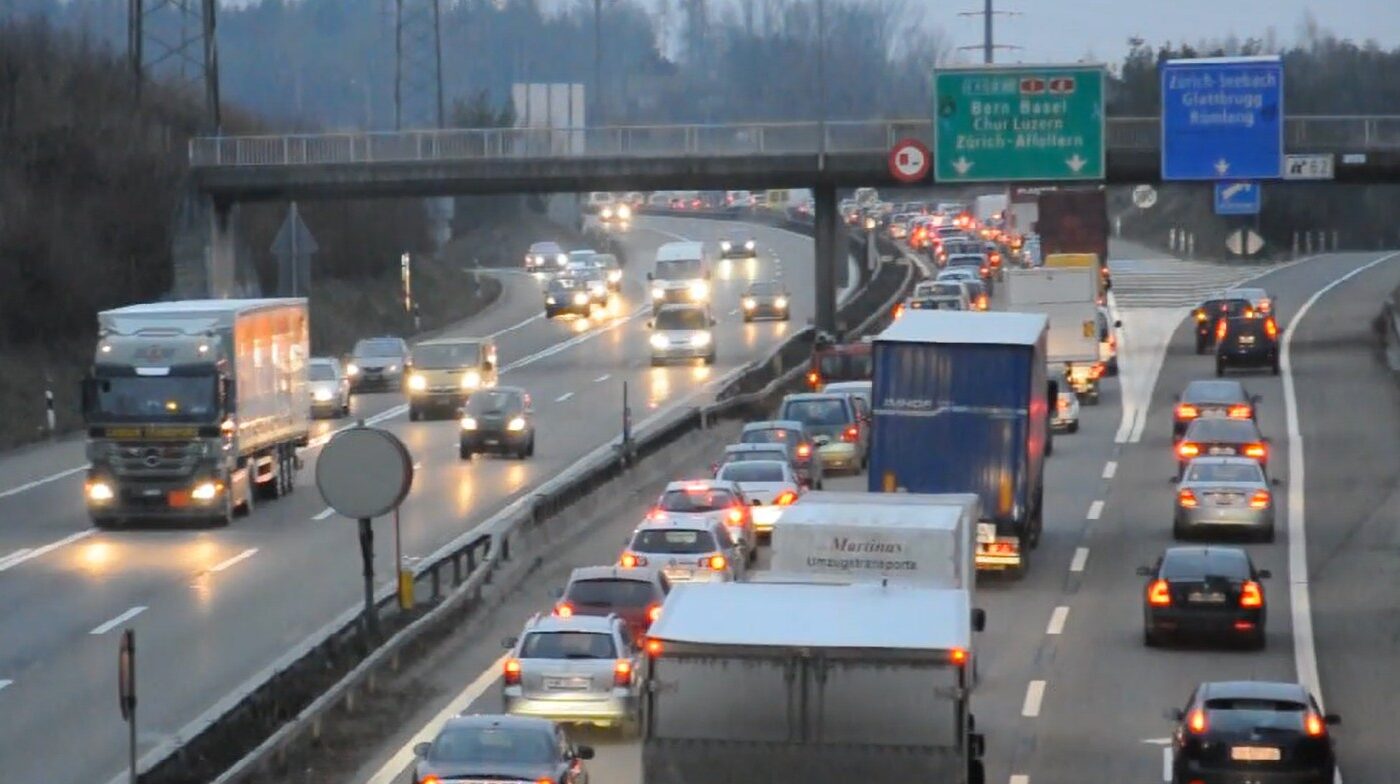
It had become apparent in the days leading up to the vote; the Swiss electorate rejected the expansion of highways yesterday, Sunday, by around 52 to 48 percent. It is still a surprise. This also has consequences for freight transport in Switzerland, which takes place 83% on the road. It is not surprising that the Swiss Commercial Vehicle Association ASTAG regrets this decision.
(Bern) The Swiss electorate has made a statement and rejected the expansion of national roads. This involved a total of six projects, including a tunnel in the Basel region under the Rhine, which was intended to relieve the city of Basel and the municipality of Birsfelden (both locations with Rhine ports). During the evening rush hours between 4 PM and 7 PM, traffic heading north is often at a standstill. This route is also a significant axis in the north-south traffic between Germany and Italy. Now, creative solutions are needed. One possibility could be the highway connection from the Swiss A3 to the German A98 at Rheinfelden. Pressure must now be increased, as the rejected Rhine tunnel would have benefited transit traffic, which consists largely of German cars and trucks traveling to and from Germany.
The expansion of the tunnel under Schaffhausen, which was also among the rejected projects, affects transit traffic on the north-south axis.
ASTAG Also Regrets the No
Of course, the Swiss Commercial Vehicle Association ASTAG also regrets the rejection of the expansion of national roads. In freight transport, this significantly questions the cooperation of all transport modes. All six rejected projects play a role in domestic freight transport within Switzerland. The greatest concern is for supply and disposal. Due to numerous capacity bottlenecks, overall freight transport will soon reach its limits.
The current voting result on the expansion step 2023 for national roads is very serious from the perspective of the road transport industry. The Swiss Commercial Vehicle Association ASTAG naturally acknowledges and respects the will of the people, but takes the narrow rejection decision with disappointment and, above all, with great concern. Councilor Thierry Burkart, Central President of ASTAG, is particularly disturbed by the false statement that gasoline prices have risen: “Firstly, this is not true, and secondly, we invite the opponents to join us in fighting against any increase in mobility costs!”
The greatest impacts are to be expected in supply and disposal. In domestic transport within Switzerland, 83 (!) percent of all goods are transported by road; fine distribution mainly works thanks to trucks—without the railways having any chance of gaining more market share due to a lack of rail connections. 73 percent of road transport, in turn, takes place via national roads. It is clear that the increasing congestion across the entire network leads to enormous problems.
Now 49,000 Traffic Jam Hours Per Year
With around 49,000 traffic jam hours per year, transports arrive late or not at all, and more and more vehicles are needed for the same volume of orders. Therefore, ASTAG fears that overall freight transport by rail and road will soon reach capacity limits. “Our industry will continue to work on viable, realistic solutions,” says Thierry Burkart: “However, we also expect proposals from those circles that campaigned for a no.”
Photo: © Loginfo24