The Tunnel Boring Machines for the Second Gotthard Tube Have Started
14. February 2025
Gebrüder Weiss Expands Network in North America with Phoenix
14. February 2025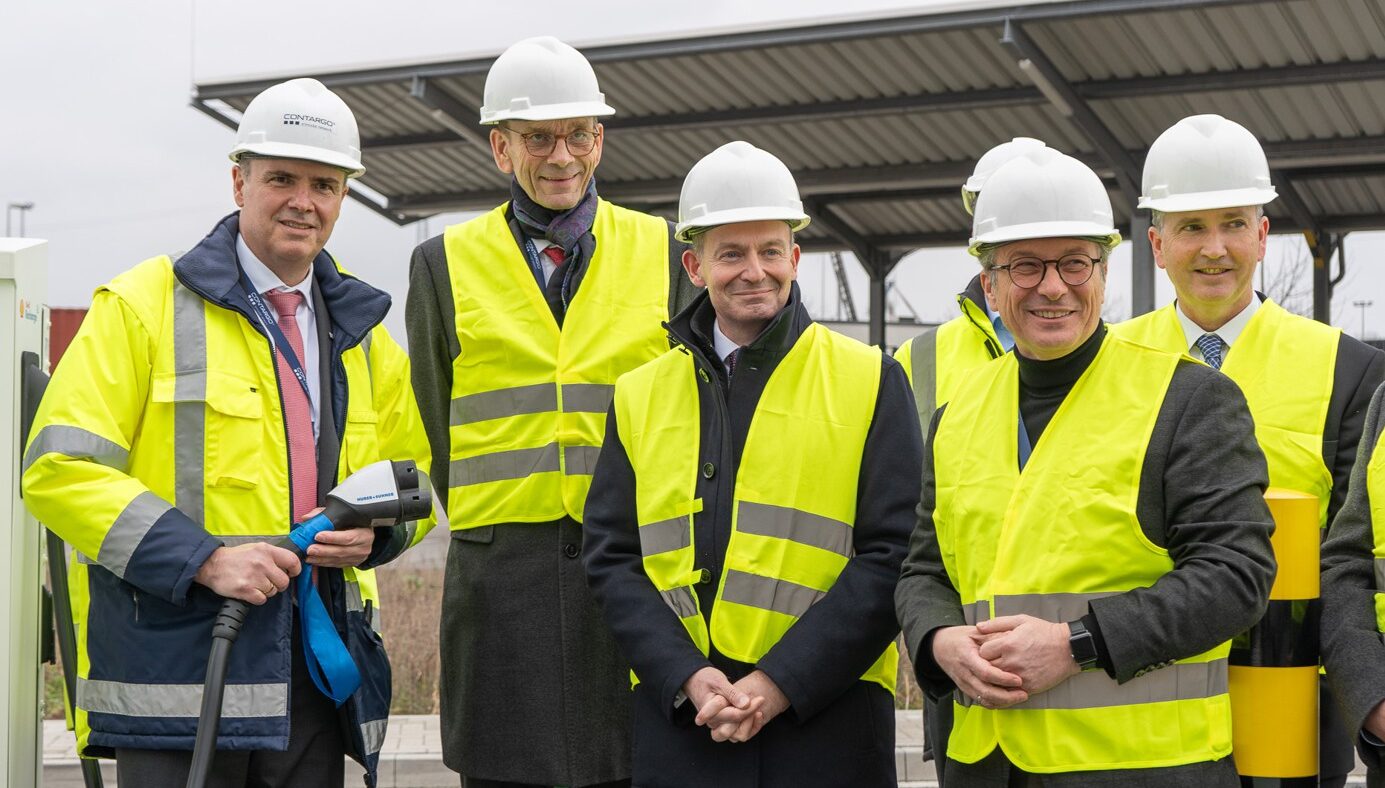
The container hinterland logistics network Contargo today celebrates the official opening of its charging infrastructure for fully electric trucks at the terminal in Neuss. The company is currently setting up up to 90 charging points and energy management systems, including battery storage, at 15 locations for its growing fleet of electric trucks – supported by the federal government. This will create Germany’s largest private charging infrastructure for electric trucks.
Dr. Volker Wissing, Federal Minister for Digital and Transport, symbolically inaugurated the first eight charging stations in Neuss with a speech: “I am pleased that our funding has initiated the market ramp-up of climate-friendly heavy commercial vehicles, which is already progressing dynamically. Every climate-friendly truck helps us achieve a key goal of our political work: to make our country climate-neutral by 2045. Contargo is thus a role model for the entire industry. It is wonderful to see how wisely the company is using investments and recognizing the opportunities of transformation – together we are achieving impressive innovations in Germany.”
“At the Neuss location, we are symbolically opening eight charging points today for all other locations, which stand for much more,” says Jürgen Albersmann, CEO of Contargo. “It is the cornerstone for the decarbonization of our truck fleet. As one of the largest trimodal hinterland container logistics networks, we see ourselves as responsible for presenting real solutions to actively drive the transport transition forward together with our customers. This commitment is important as combined transport will grow significantly in the coming years.”
Focused on growth
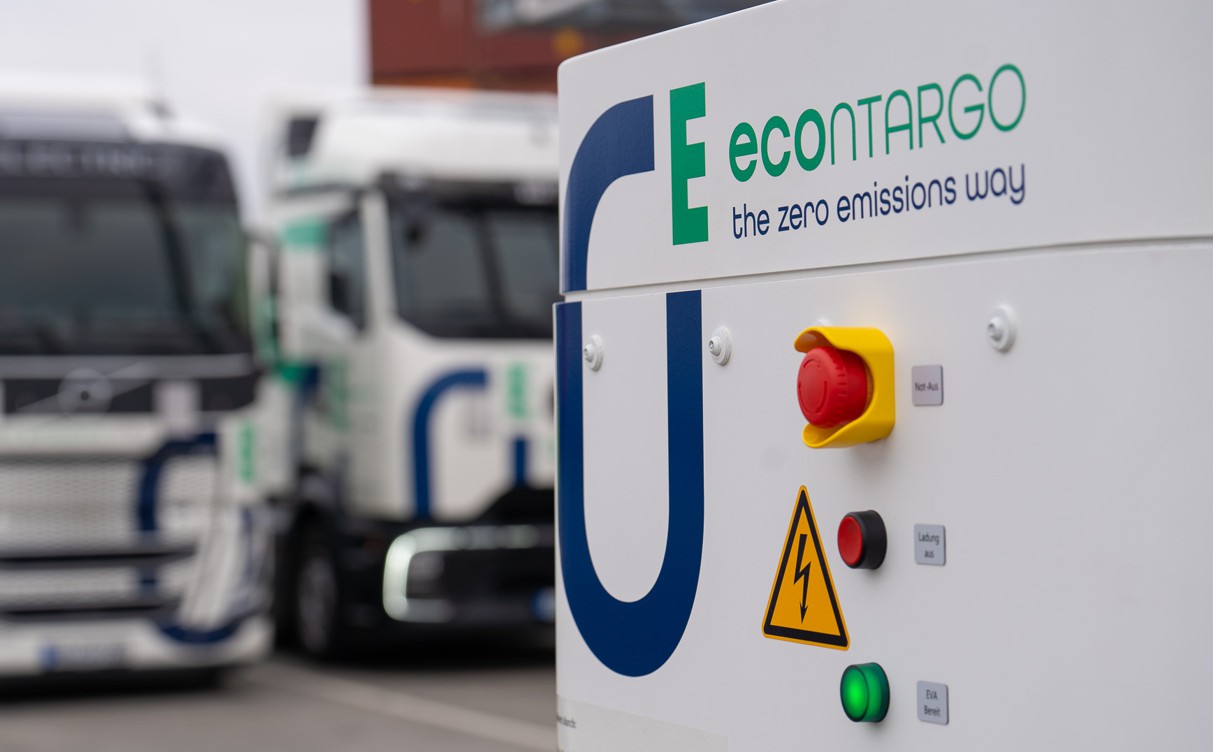
Similar facilities are currently being developed at 14 other locations of the Contargo Group. So far, 22 charging points at seven locations with a capacity of 250 kW each are in operation, with a total of 90 planned initially. Thanks to its own charging infrastructure, the company can supply its fully electric trucks with green electricity.
Overall, Contargo’s fleet of fully electric 44-ton trucks currently includes 57 vehicles, with another 33 to be delivered soon. Once the 90 charging points are operational, scaling up the fleet should be feasible. The charging infrastructure is therefore designed for further growth, so that in the future, vehicles from subcontractors can also charge there.
 Pioneering work on the way to charging infrastructure
“These are not just simple charging stations, but a complete integration into the ecosystem of the container terminals,” explains Olaf Jahn, operations manager in Neuss and cross-site responsible for the energy management of the project. “Thanks to our intelligent energy management system, we can optimally adjust our various consumers – from the crane systems to the office infrastructure to reefer containers and charging points for electric trucks – to the available electricity supply.”
In the future, the Contargo terminals will not only receive electricity from their energy supplier but also through recuperation from the crane systems and from photovoltaic systems. The battery storage ensures that no load peaks occur, which would additionally increase operational costs. Moreover, surpluses can be reserved for times of high electricity demand.
This integration of the construction of the charging infrastructure during ongoing operations is an extraordinarily complex task, confirms Pinar Yüzgec Elma, project manager for charging infrastructure at Contargo. “On the one hand, we have to coordinate with a very large number of stakeholders, from network operators to property owners to building authorities, and on the other hand, very few of them have experience with such a project. Nevertheless, it is impressive to see how everyone is working together on this forward-looking solution.”
86 electric trucks and 93 charging stations will be funded under the guidelines for the promotion of light and heavy commercial vehicles with alternative, climate-friendly drives and associated refueling and charging infrastructure (KsNI) with around 42.4 million EUR by the Federal Ministry for Digital and Transport. Of this, around 15.1 million EUR will be provided under the German Recovery and Resilience Plan (DARP) through the European Recovery and Resilience Facilities (ARF) in the NextGenerationEU program. The funding guidelines are coordinated by NOW GmbH, and applications are approved by the Federal Office for Logistics and Mobility.
Photos: © Contargo / Caption for the title photo (from left to right): Jürgen Albersmann, CEO of Contargo, Klemens Rethmann, Rethmann Group, Dr. Volker Wissing, Federal Minister for Digital and Transport, Reiner Breuer, Mayor of the City of Neuss, Andreas Stöckli, Board Member of Rhenus