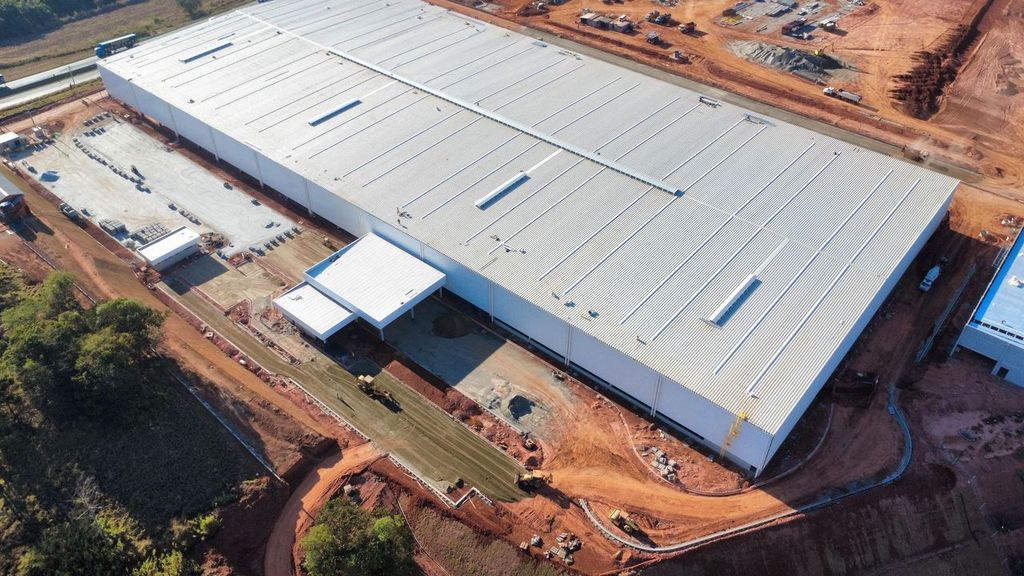
Arvato Continues to Focus on Automation
16. May 2025
HGK Shipping is allowed to test remote-controlled inland vessel
16. May 2025
EU Member of Parliament Sophie Kircher and Kombiverkehr KG aim to jointly end the political standstill in the debate about the future of the Combined Transport Directive. Therefore, Kombiverkehr, together with Kircher, who is the deputy chair of the TRAN Committee, initiated a Lunch Debate yesterday in the European Parliament. The high-profile event also aimed to provide new impulses for sustainable European rail freight transport.
(Frankfurt) The background of the initiative is the third draft of the EU Commission on the Combined Transport Directive presented in November 2023. Despite the declared goals for shifting traffic, the growth of combined transport in Europe continues to be hampered by a lack of standardization, implementation deficits in the member states, and a stalled legislative process. The industry urgently demands planning security – yet the negotiations are at an impasse.
“It is high time for this debate to bring movement back into combined transport. A modern and efficient transport system is one of the most important foundations for competitiveness in the EU. The direction is clear: We need a noticeable shift of traffic away from the road and towards the rail. It is very important how the legal framework looks, especially in the Alpine regions, to avoid generating more traffic on the roads in the end,” emphasized MEP Sophia Kircher.
Central topics of the debate included:
- The biggest challenges of the Combined Transport Directive
- The necessity of a future-proof definition of combined transport
- Better coordination between existing legal acts (e.g., Weight and Dimensions Directive)
- The role of national subsidies and their impact on fair competition
- Lessons learned from crisis situations such as the snow chaos in 2019 or the situation in the Brenner Corridor
- The exchange between the European Commission, Parliament, and the logistics industry about the next legislative steps
Nothing has progressed since the late 1990s
Armin Riedl, Managing Director of Kombiverkehr KG, made clear demands, particularly to the Polish Council Presidency: “The topic of combined transport is too important to be left unattended any longer. Since the late 1990s, nothing has progressed in renewing the most important directive for this rapidly growing area of rail freight transport.” The Commission, Parliament, and Council Presidency must now make a new attempt to avoid jeopardizing the economic upswing in Europe. “A growing industry needs a strong freight transport system. And that cannot happen without a powerful combined transport system based on an innovative, understandable, and completely renewed Combined Transport Directive.”
Appeal to the Member States
Kristian Schmidt, Director of the Directorate-General for Mobility and Transport (GD MOVE), also appealed to the member states to take their responsibility more seriously and accelerate the implementation of common European goals in the transport sector.
With this initiative, Kombiverkehr, together with political decision-makers, sends a clear signal: Combined transport must be strengthened, legally clearly regulated, and strategically expanded – for a climate-friendly and crisis-resistant European logistics.
Photo: © Kombiverkehr / Image caption: Sophia Kircher (center) and Kristian Schmidt (right) in conversation with moderator Detlef Fechtner (left), chief reporter of the Börsen-Zeitung