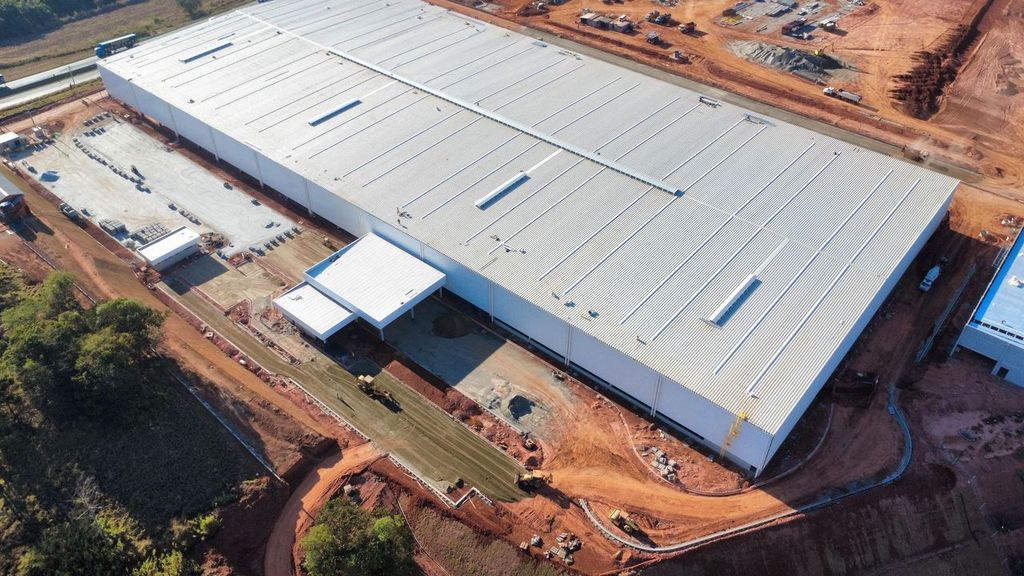
AutoTerminal by BLG in Kelheim with Large-Scale Photovoltaics
10. July 2025
Austrian Post Launches New Apprenticeship in “Mail and Parcel Logistics”
10. July 2025
The digital transformation in supply chain management (SCM) is strategically recognized, yet in practice, it is often not fully realized. This is shown by the results of the 22nd SupplyX Barometer, which surveyed 150 logistics managers on the topic of “Digital Change in Supply Chain Management”: 82 percent of companies state that digitalization is a must.
(Hamburg) However, the actual implementation status reveals that only 9 percent currently have a fully digitally integrated supply chain, while the majority is in a transitional phase. Despite clear target images, many companies struggle with structural or technical barriers.
The biggest challenges in implementing digital strategies for many companies lie in practical execution: High implementation costs are perceived as a significant burden by 39 percent of respondents. Data protection requirements and cybersecurity, as well as the lack of interoperability of existing IT landscapes, are also cited as major hurdles. The absence of uniform standards often leads to applications and platforms existing in isolation, which can result in significant efficiency losses.
Jörn von der Fecht, Chief Digital Officer (CDO): “Many companies know where they need to go, but the path there is technically complex and organizationally challenging,” explains Jörn von der Fecht, Chief Digital Officer at SupplyX, regarding the study’s results. “Especially the lack of standardized interfaces often prevents systems from communicating with each other. This leads to media breaks, lack of transparency, and operational delays.”
High Benefits Especially in Warehousing and Planning
Where digital technologies are already consistently used, a clear added value is evident. Particularly in warehouse and inventory management, 61 percent of respondents report significant efficiency gains. In companies with 250 to 1,000 employees, this figure is even higher at 75 percent. Many also benefit from data-driven applications in forecasting and demand planning. Almost every second respondent (48 percent) states that this provides significant added value for planning security and resource utilization, with 67 percent in the mid-sized sector reporting even more. Transport and route optimization also deliver measurable efficiency gains, with 38 percent reporting high added value.
The results clarify: Especially in operational application areas, the added value of digitalization becomes visible. Intelligent technologies unleash their full potential where processes can be data-driven. Accordingly, many companies are specifically focusing their digitalization plans on this operational lever – especially where concrete efficiency gains have already become visible.
Willingness to Invest is Present – But Not Widespread
Almost every second company (48 percent) plans to invest in automated inventory management. This figure increases with company size and shows: The higher the organizational complexity in companies, the more urgent the need to manage inventories digitally and to identify bottlenecks early. Additionally, 43 percent of respondents want to use digital platforms to integrate their partners, while one in three companies (33 percent) intends to invest in data analysis and artificial intelligence.
At the same time, however, more than a quarter of respondents (27 percent) indicate that they currently have no concrete digitalization measures planned. For von der Fecht, this is an alarming signal: “Those who do not invest in digital infrastructure now will find it difficult to remain competitive. Especially in logistics, the demands for transparency, speed, and resilience are continuously increasing, which cannot be achieved with analog processes.”
Real-Time Data and Networking as the Next Stage
The topic of real-time is also playing an increasingly important role. Almost every second surveyed company (48 percent) considers the use of real-time systems essential for agile supply chain management. In companies with up to 1,000 employees, this figure is even 92 percent – a clear sign of their high practical orientation and the necessity to respond flexibly to volatile market changes. Nevertheless, only 41 percent of logistics managers report being digitally connected with their customers and partners.
Courage for Change
“The full potential of digital supply chains lies in seamless networking – both internally and externally. Only when information flows in real-time across company boundaries does the reaction speed emerge that is needed in volatile markets today,” says von der Fecht. “The digitalization of SCM is no longer a future topic; it is strategically recognized and often initiated. However, for digital strategies to yield measurable results, more than just technology is needed: It requires courage for change, resources for implementation, and reliable partners.”
Download SupplyX Barometer here
Photo: © SupplyX