






driveMybox, the Digital Container Trucker, Launches in Greece
13. July 2025
Logsol Creates a Logistics Master Plan for Alstom in Bautzen
13. July 2025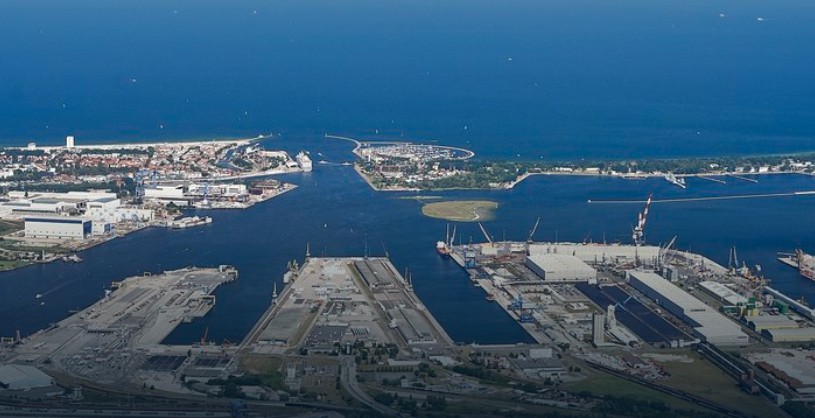
The Rostock Port has once again established itself as a powerful universal port in the first half of 2025. A total of 16.5 million tons of goods were handled, of which 15.7 million tons were in the overseas port – an increase of 600,000 tons compared to the previous year and just below the record level of 2023.
(Rostock) “The handling results of the overseas port have been at an exceptionally high level for three years,” emphasized ROSTOCK PORT Managing Director Dr. Gernot Tesch. The ferry passenger traffic also continued to grow, reaching 1.03 million passengers, an increase of 14,000.
The ferry and RoRo terminal showed particularly strong performance again with 8.4 million tons of cargo handling – about 100,000 tons more than the previous year. This area accounted for 54% of the total handling. The number of ferry and RoRo ship calls was 2,878, slightly above the previous year’s level. In rolling traffic, 196,100 accompanied trucks were transported, an increase of nearly 3,000 units. Unaccompanied trailers rose to 74,100, representing a 5% increase. Additionally, 10,800 railway wagons (+7%) and around 70,000 new cars (+30%) were processed.
Combined transport also recorded an upward trend with 56,500 intermodal units. This marks a return to the growth path after two difficult years. Currently, 48 intermodal trains operate weekly between Rostock and destinations in Germany, Italy, Luxembourg, Slovakia, and Romania. France and Spain are also connected via Bettembourg. A new connection to Karlsruhe has expanded the service since July 2024. To meet demand, the infrastructure is being expanded: The craneable tracks in the terminal will be extended to 680 meters by 2026.
Increase in Bulk and General Cargo
The port also saw gains in bulk and general cargo: The handling of liquid goods reached four million tons, including three million tons of crude oil for the PCK refinery in Schwedt. The total handling of bulk goods was 2.8 million tons, mainly due to increases in coal (+330,000 tons) and rapeseed (+60,000 tons). The grain handling saw a slight decline. In the general cargo segment, 451,000 tons were handled – 161,000 tons more than in the previous year, including pipes, wind power components, and crane systems.
In conjunction with successful operations, ROSTOCK PORT is making extensive investments in port infrastructure. The construction of berths 33 and 34, with an investment sum of nearly 20 million euros, is ongoing until 2026. The deep-water berth 5 in the oil port is in the planning phase and is expected to be realized from 2026. The ongoing upgrade of berth 3 was completed in June.
As part of the EU project “Rail-IT-MoS,” railway and switch installations have been modernized, and a new elevator system for ferry passengers has been put into operation. Additionally, an extra asphalted handling area is being created west of the quay hall 9a. The North Gate is being technically modernized for automated truck check-in and check-out.
With the EU-funded EMS project HARBOUR, Rostock and the Finnish port of Hanko are jointly investing in the expansion of their handling infrastructure. For Rostock, this particularly means the expansion of the intermodal terminal, the extension of the track facilities, and new staging areas. The project volume of nearly 14 million euros is funded half by the EU.
Maintaining Importance Through Targeted Investments
At the same time, ROSTOCK PORT is working with politics and business on a strategic land reserve to actively shape future developments – for example, in the energy sector. Through forward-looking planning and targeted investments, the port strengthens its position as a multimodal hub in the Baltic Sea region and a driver for sustainable freight transport.
Photo: © Rostock Port


