A new intermodal terminal is to be built at Dortmund Westfalenhütte
Nov 4, 2025 at 1:17 PM
Hermes Germany is Prepared for the Christmas Package Season
Nov 6, 2025 at 12:36 PM
Chinese online platforms like Temu and Shein are rapidly changing European trade and logistics structures. With massive investments in their own fulfillment and distribution centers, they are establishing local delivery networks that force traditional parcel services and retailers to rethink their strategies. This is the conclusion of a recent analysis by SKR AG, Lucerne.
“Temu and Shein are achieving in one year what established providers have taken years to accomplish,” says Rico Back, Managing Partner of SKR AG. “Delivery speed, cost control, and access to customer data are their levers – the new logic is: Local-to-Local instead of Cross-Border. This significantly shifts the power in the supply chain.”
This dynamic is fueled by the new customs policy of the USA and the EU. The US government has eliminated duty-free status for goods shipments under $800 as of August 29, 2025. In the EU, the current exemption threshold of 150 euros is set to be abolished by March 1, 2028 at the latest.
What was supposed to put an end to cheap imports is proving to be a catalyst for professionalization, according to the SKR analysis. “The platforms are no longer importing millions of individual packages, but entire containers, clearing customs centrally and distributing from European hubs,” explains Back. “This way, they adapt to the new regulatory hurdles, reduce costs and delivery times, and maintain control over customer data and the supply chain.”
Fulfillment Networks Built at Record Speed
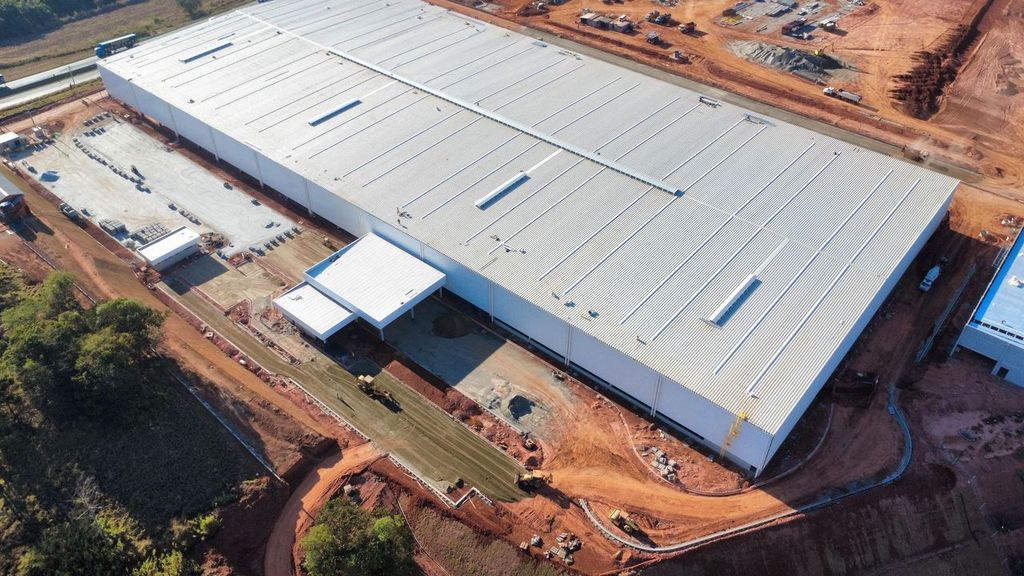
In the past twelve months, Temu and Shein have reportedly massively expanded their European capacities. Temu now operates warehouse locations in Germany, France, Spain, Italy, the Netherlands, and Austria. Shein has established centers in Belgium, Frankfurt, Spain, Italy, Ireland, and Poland. The goal: faster delivery times, lower shipping costs, efficient customs processing, and local returns management.
“We are seeing a new generation of global platform operators creating their own logistics ecosystems in Europe,” says Back. “This creates new volume flows – however, the price pressure on the last mile will not decrease.”
Parcel Services and Retail Under Pressure
Delivery to the end customer accounts for over 50 percent of the total costs of a shipment. Platforms expect extremely low delivery prices, especially for goods in the low price segment. If parcel services take on these shipments to maintain volume stability, they may come under pressure. Because it is becoming evident: Margins are stagnating. According to the KEP Study 2025 by the Federal Association of Parcel and Express Logistics (BPEX), B2C volumes in Germany grew by 5.5 percent in 2024, while the more profitable B2B volumes decreased by 1.6 percent. Meanwhile, the inflation-adjusted revenue per shipment has fallen below the level of 2014 – higher costs could hardly be passed on.
To benefit more from online demand, many service providers are responding with their own fulfillment offerings. However, Back also sees risks: “Fulfillment is not a guarantee of profitability – it is capital-intensive and requires high utilization. Those who do not strategically think through the establishment of fulfillment solutions and do not digitally integrate processes, spaces, and transport will burn money instead of earning it.”
The competition is also intensifying for retailers. “Those who are neither cheap nor particularly unique will be crushed,” says Back. “We observe that retailers are building affordable private labels, launching new concepts, or uncompromisingly focusing on premium, quality, and service. In any case, highly efficient logistics will determine competitiveness.”
Europe’s Strategic Challenge
SKR AG points to the consequences of increasing platform concentration: “When a significant portion of shipment volumes is controlled by a few global platforms, logistics providers lose their negotiating power,” says Back. “Europe should not become a mere sales market, but should retain value creation, jobs, and data in its own hands. Strategic action is required: supply chains must be diversified, partnerships with clear rules established, operational efficiency and scaling targeted, and innovation and differentiation accelerated.”
Photo: © SKR AG