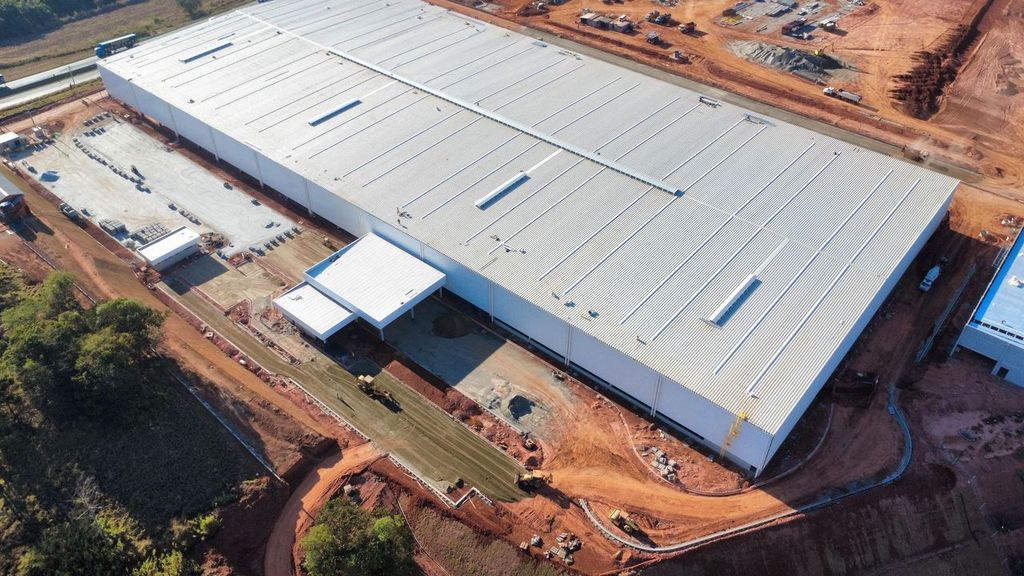
DHL Opens Innovation and Contract Logistics Center in Dubai
4. December 2025
Frank Dreeke Inducted into the Logistics Hall of Fame
5. December 2025
A first industry-ready standard for the digital freight document (eCMR) as well as real data pilots for validating and implementing a standard for the exchange of emissions data: In 2025, the Open Logistics Foundation provided evidence of the impact of open source in logistics in many areas. The year concludes with the foundation having 50 members and seven network partners from twelve different countries, aiming to become even more diverse in 2026.
(Dortmund) The Working Group “Electronic Transport Documents” forms the flagship project of the Open Logistics Foundation, which was founded at the end of 2021, with its associated project “eCMR”. In June 2025, the press conference at transport logistic in Munich generated significant resonance: The foundation and its members presented the first industry-ready open-source software that brings the digital freight document to a common standard.
“As part of the project, 28 companies from the logistics sector collaboratively developed a de facto or industry standard,” explains Andreas Nettsträter, CEO of the Open Logistics Foundation. “We have finally established the long-demanded foundation for the digital and efficient design of international freight transport – technically and legally secured. Open source simplifies the entry into digitization and is a driver for standardized commodities in digital value chains. Our goal is to digitize many more transport documents and information with this open-source approach.”
Standardized Exchange of Emissions Data
The Working Group “Enabling Logistics Decarbonisation” also made headlines in 2025. Founded in 2024, it focuses on an open-source implementation for the exchange of emissions data. The project “Emissions Data Exchange” aims at the validation and implementation of the iLeap data model developed by the Smart Freight Centre and the SINE Foundation for the exchange of sustainability data along the supply chain.
In this context, real data pilots were launched within the Open Logistics Foundation in 2025, which will continue in 2026. The goal is to accompany real transports with real data and publish insights from the foundation. “The Working Group not only advocates for promoting decarbonization in the logistics industry but also places a special focus on implementing de facto standards and a jointly usable open-source implementation,” says Nettsträter. “No logistics company can ignore this topic, and we want to show the industry that it can only be done together.”
The Relevance of Open Source Solutions Has Increased Significantly in 2025
The Open Logistics Foundation sees itself as a transformation initiative and is perceived as such: “The awareness of the relevance of open-source solutions has increased significantly in 2025 – not least in connection with trend topics such as digital sovereignty and resilience,” summarizes Carina Tüllmann, CCO of the Open Logistics Foundation. The fundamental idea of the foundation, established at the end of 2021, has proven itself and has been confirmed by successful projects such as in the case of eCMR. “We have built a strong trust in competence within the industry and are preferred to be approached on topics such as eCMR, eFTI, or other digital issues.”
This is also reflected in the increasing Europeanization of the foundation in 2025. By the end of the year, there are 50 members and seven network partners from twelve different countries on board, with a focus on Europe. “In 2026, we will continue to promote collaboration with major European network and industry partners to be able to engage more prominently in regional markets. We want to become even stronger and more diverse,” adds Tüllmann.
Photo: © Open Logistics Foundation / Image caption: Carina Tüllmann, CCO of the Open Logistics Foundation, and Andreas Nettsträter, CEO of the Open Logistics Foundation