Seifert Logistics Takes Over Parts of Contract Logistics for Husqvarna
18. October 2021
Focus Money Awards trans-o-flex as Best Logistics Provider
18. October 2021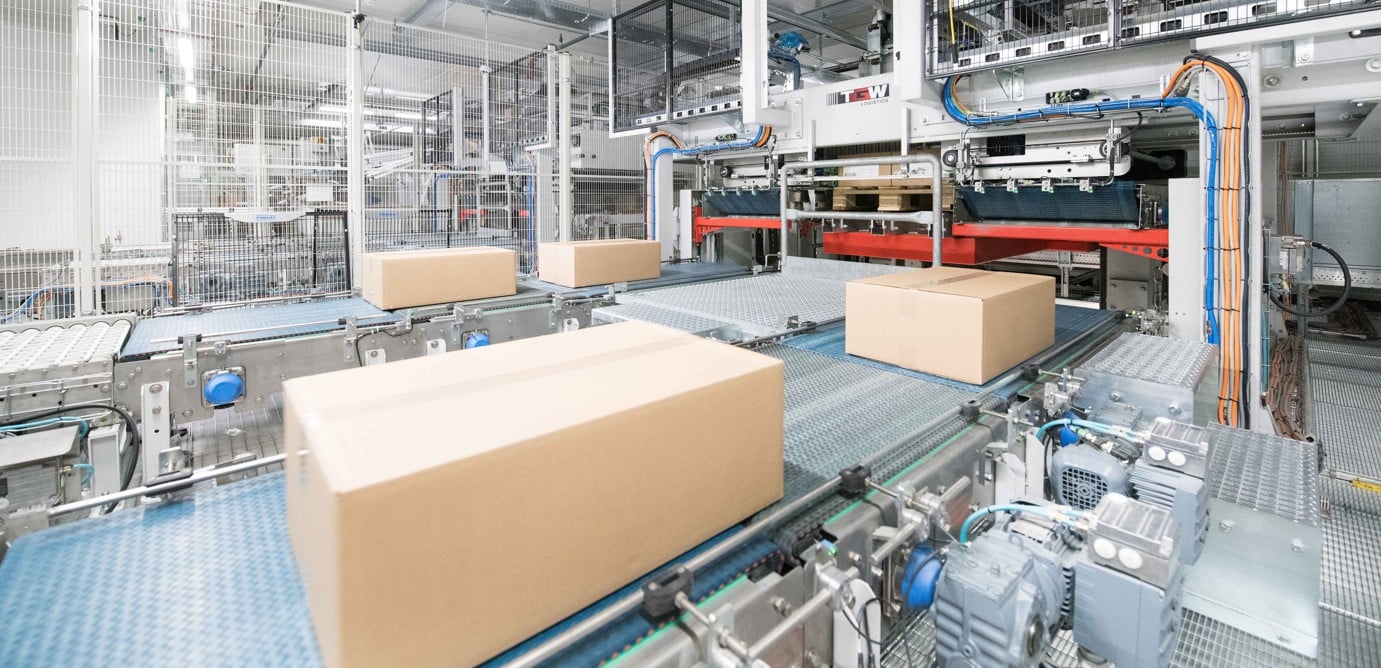
During the Corona pandemic, intralogistics specialist TGW received an increasing number of inquiries regarding the automation of frozen warehouses. However, the growing popularity of frozen foods and the trend towards home cooking are not the main reasons why companies initiate automation projects. They are primarily suffering from the enormous labor shortage in the industry.
(Marchtrenk) The consequences of the pandemic are prompting food retailers and logistics service providers to increasingly consider the automation of frozen warehouses – and to plan concrete projects. This has been the experience of the TGW Logistics Group in recent months. “The growing appetite of consumers for frozen vegetables or pizza and the fact that more people cooked for themselves during the lockdowns are trends that increase throughput. However, the most important reason for automation projects is the worsening labor shortage in this logistics sector,” emphasizes Michael Schedlbauer, Industry Manager for the food sector at TGW. According to TGW, sustainability goals, rising energy costs, and digitalization also rank high on the list of important arguments for companies.
Both in the USA and Europe, cold storage facilities are currently well filled. The Association of German Cold Stores and Cold Logistics Companies (VDKL) reports, for example, that the cold stores of its members were 1.3 percent fuller in 2020, with an average overall occupancy rate of 81.4 percent, compared to 2019 (80.1 percent) – the highest occupancy rate in 18 years.
Labor Shortage as a Driver for Automation
The biggest challenge in the industry is the harsh working conditions at -25 degrees Celsius or colder. Warehouse workers prefer jobs in non-refrigerated distribution centers, even though in many countries they receive not only regular warming breaks but also legally mandated bonuses for their work. “In the meantime, there are facilities in Western Europe where almost exclusively people from Ukraine or other Eastern European countries are employed,” explains Schedlbauer. Finding, training, and retaining new employees costs companies a lot of time and money. The business case for a manual cold storage facility is therefore worse compared to a non-refrigerated facility. “That’s why investments in automation projects in this logistics sector are even more profitable than in others,” emphasizes retail expert Schedlbauer.
Save up to two-thirds of energy costs
Investments in automated facilities become more reasonable when companies consider the total cost of ownership. With an automated warehouse designed to be much more compact than a manual solution, companies can save up to two-thirds of energy costs. Data from TGW shows that productivity can nearly double and process quality can be significantly improved.
High energy savings and emission reductions can also be achieved when companies centralize multiple distribution centers. For example, TGW customer COOP combined three distribution centers into a single facility in Schafisheim, Switzerland. The result: The Swiss save up to 10,000 tons of carbon dioxide per year with their optimized supply chain. “Since many companies have set ambitious sustainability goals, they cannot avoid automation. Logistics insourcing and centralization will also remain two important future trends,” predicts Schedlbauer.
Increasingly demanding customer expectations are also driving both retail companies and their contract logistics service providers to automate and digitalize. More and more consumers want to know where the offered products come from and what the supply chain looks like. Innovative food producers and retailers therefore offer to digitally trace the entire supply chain – for example, for fish from the cutter to the frozen shelf. “Seamless traceability is also made possible by the software solutions used in automated warehouses,” explains Schedlbauer.
Long-term Investments in Automated Warehouse Structures
TGW expects that even more companies and investors will invest in automated frozen warehouses in the future. One example of this is TGW customer NewCold. “On the one hand, capital costs are currently low. On the other hand, even under pandemic conditions, the statement holds true: People will always eat and drink. Therefore, long-term investments in new, automated warehouse structures also promise a secure return,” concludes retail expert Schedlbauer.
Photo: © TGW / Image caption: View into the frozen warehouse of the Swiss food retailer Coop