


Start-up Transportpreis.com Digitizes Freight Pricing
26. October 2021
LIS AG presents itself at various trade fairs this autumn
27. October 2021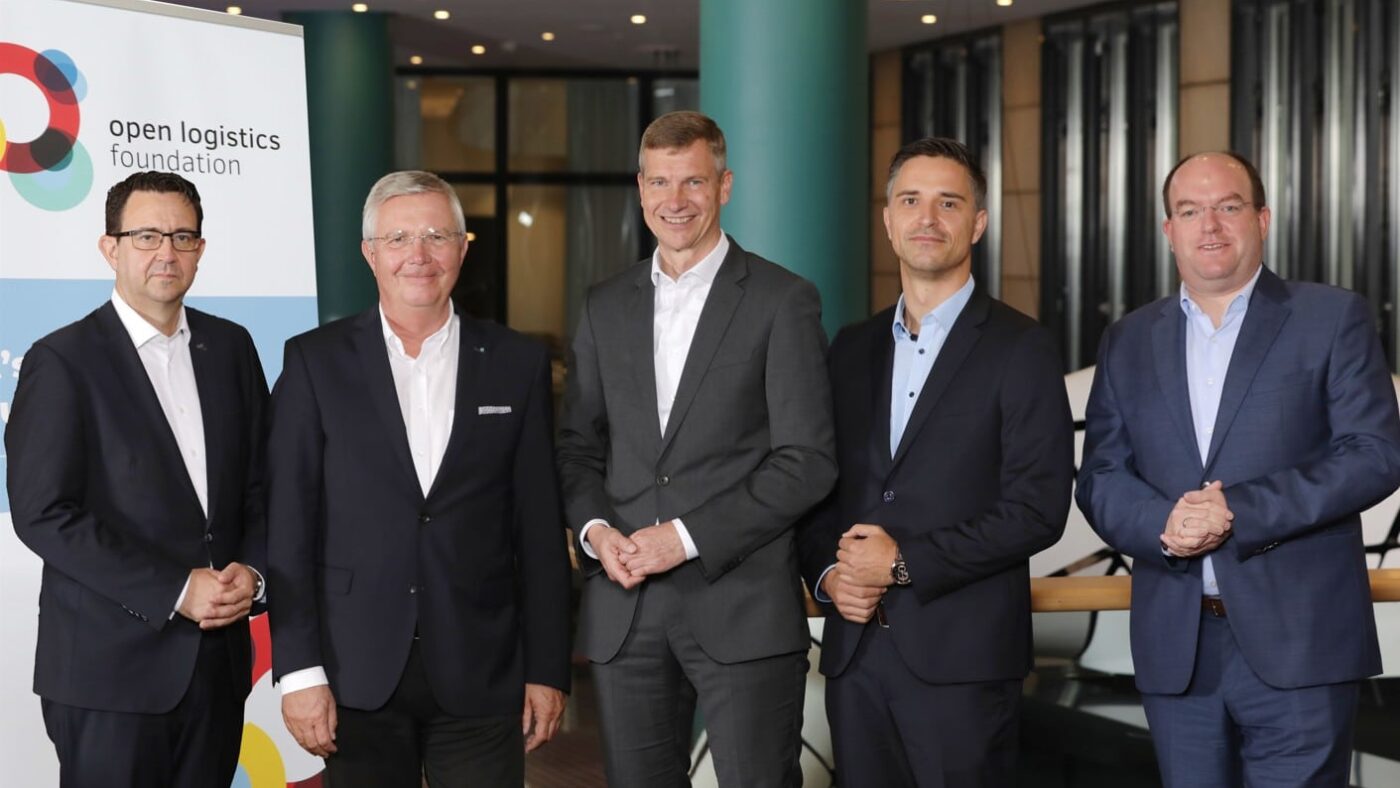
Dachser, DB Schenker, duisport, and Rhenus establish the Open Logistics Foundation to embark on the next chapter of digitalization in logistics. The foundation’s founders take a pioneering role for open source in logistics. Additional partners have announced their participation in the project. The launch is set for November 2021.
(Dortmund/Berlin, 26.10.2021) – Dachser, DB Schenker, duisport, and Rhenus founded the Open Logistics Foundation last Friday in Berlin. The purpose of the non-profit foundation is to build a European open-source community aimed at advancing digitalization in logistics and supply chain management based on open source and standardizing logistical processes through de facto standards. AEB, BLG Logistics Group, Fraunhofer Society for the Advancement of Applied Research, GS1 Germany, Lobster Logistics Cloud, and Setlog have announced their participation in the new open-source community. Such a technology initiative is not only unique in logistics; the foundation’s founders also take a pioneering role in the future topic of open source.
“Digitalization in logistics can only be advanced together. Therefore, open source is an important success factor for the entire logistics industry and at the same time a driver for standardized processes in digital value chains. We see the founding of the Open Logistics Foundation as the first step towards a platform economy based on European legal norms and values. It is a beginning and at the same time a call to the logistics sector to think about technology and processes together and to actively participate in the open-source community,” the founders stated in a joint declaration. Now it is about anchoring open source in logistics and creating the internal structures for working with the corresponding hardware and software.
To all logistics-oriented companies
The foundation addresses all logistics-oriented companies and their IT developers. It is open to new members from all areas of logistics through its support association, Open Logistics e.V., also founded in Berlin, starting from industry, trade, and services to carriers and political organizations. Numerous companies have already announced their participation in the support association, including AEB, BLG Logistics Group, GS1 Germany, Lobster Logistics Cloud, and Bochum’s Setlog Holding, as well as associations like the Fraunhofer Society for the Advancement of Applied Research.
The core of the foundation’s work is the operation of the so-called Open Logistics Repository, a technical platform where software and hardware, interfaces, reference implementations, and components are available open source under a permissive license. To promote broad acceptance within logistics, all tools and components will be available free of charge and without restrictions for commercial applications. Companies can use these to expand their own platforms or to set up new products and business models more quickly. The open-source approach guarantees an open standard for the digitalization of logistical processes while offering a high degree of flexibility for individual adjustments. Companies that use open source are usually more productive, have lower costs, and avoid being tied to proprietary software. Additionally, it is advantageous that these are not isolated software solutions, but all components are compatible with each other, facilitating digital networking beyond company boundaries.
Selection of collaborative projects
Among the essential tasks of the foundation is the selection of collaborative projects whose developments are to be included in the repository. It oversees the quality of the open-source software and guarantees neutrality in its development. It also offers training for companies on how to use the platform.
The platform’s development phase will take place next year. At the founding, open-source projects were already named, including the first open-source electronic freight document (eCMR) and implementations for the electronic pallet slip or the FTS interface VDA 5050. Further developments from the community are to be added in the future.
Composition of the committees
On the occasion of the foundation’s establishment, the committees were also filled. Jochen Thewes (Chairman), CEO of DB Schenker, Dr. Stephan Peters (Deputy Chairman), member of the board of Rhenus, and Stefan Hohm (Deputy Chairman), CDO of Dachser, were elected to the board. The advisory board consists of Prof. Dr. Dr. h. c. Michael ten Hompel (Chairman), Managing Director of the Fraunhofer IML, and Markus Bangen, CEO of duisport, as well as Jakub Piotrowski, CIO/CDO of the BLG Logistics Group.
The initiative for the Open Logistics Foundation originated from the Fraunhofer Institute for Material Flow and Logistics IML as part of its research project Silicon Economy, which is funded with 25 million euros by the German Federal Ministry of Transport and Digital Infrastructure (BMVI). More than 150 researchers are working there on an open-source software and hardware infrastructure that enables companies to automate their business operations and securely offer and use services and data across different platforms. The software and hardware developed during the runtime until 2023 will form the basis for the Open Logistics Foundation’s repository alongside developments from the community.
Statements from the participants:
DB Schenker
“If we want to successfully digitalize logistics, we must overcome silo structures. Open source can and will make a significant contribution to this. Its benefit is strikingly simple: everyone uses the same freight document, everyone plans routes or offers tracking & tracing. We want to jointly develop IT standards in logistics across company boundaries and make the results accessible to all. This open-source approach should replace individual investments in the digitalization of commodities. Every company will benefit from this.” Jochen Thewes, CEO of DB Schenker, Chairman of the Open Logistics Foundation
Rhenus
“Digitalization is not an end in itself. It overcomes interfaces and contributes to overarching goals such as transparency, efficiency, and sustainability. However, it must also be economically viable and successful in the market. 100 percent digital is not a vision but our shared future in more and more application cases. The open-source approach guarantees an open standard for the digitalization of logistical processes while offering a high degree of flexibility for individual adjustments. With the founding of the Open Logistics Foundation, we are laying the foundation for the age of open source in logistics.” Dr. Stephan Peters, member of the board of Rhenus SE & Co. KG, Deputy Chairman of the Open Logistics Foundation
Dachser
“Intelligent logistics is based on powerful IT systems. This principle has applied at Dachser for many decades and will continue to do so. However, it makes little sense to program every line of code in a standard application ourselves. This is neither economical nor does it provide a competitive advantage. On the contrary: it often prevents the pragmatic networking of partners and customers.
Therefore, it is advantageous for all participants in the supply chain if selected software components are made available as open-source elements free of charge and further developed through a neutral instance. Open source thus becomes another important competitive factor, and that is why we have supported the idea of the Open Logistics Foundation from the very beginning.” Stefan Hohm, Chief Development Officer (CDO), Dachser SE, Deputy Chairman of the Open Logistics Foundation
Fraunhofer Institute for Material Flow and Logistics (IML)
“The logistics industry must become more software-oriented if it wants to play a role in the upcoming platform economy and shape its future based on European legal norms and values. Digitalization is the goal, open source is the key to bringing all companies, regardless of size and industry, along this path. Dachser, DB Schenker, duisport, and Rhenus have laid the foundation with the establishment of the non-profit Open Logistics Foundation. Now it depends on what logistics makes of it.” Prof. Dr. Dr. h. c. Michael ten Hompel, Managing Director at the Fraunhofer Institute for Material Flow and Logistics (IML), Chairman of the Advisory Board of the Open Logistics Foundation
Duisburger Hafen AG
“After the presentation of the Open Logistics Foundation, it quickly became clear for Duisburger Hafen that we wanted to get involved. The primary goals of our engagement are industry-wide exchange, identifying overarching challenges, and creating urgently needed standards to technologically simplify location-independent collaboration. The bundling of resources and topics offers us the unique opportunity to set de facto standards instead of creating more monoliths.
Digitalization in logistics can only be advanced together. The early involvement of all parties not only creates important internal structures but also promotes mutual exploration of existing needs and necessities as well as identifying available resources.” Markus Bangen, Chairman of the Board of Duisburger Hafen AG (duisport), Advisory Board member of the Open Logistics Foundation
About Open Logistics Foundation
The Open Logistics Foundation (founded in 2021) is a non-profit and operational foundation based in Dortmund to promote open-source applications in logistics. The central purpose of the foundation is to build a European open-source community aimed at advancing digitalization in logistics and supply chain management based on open source and standardizing logistical processes through de facto standards. The foundation operates the repository, a technical platform for open-source software (OSS) and hardware (OSH), and provides interfaces, reference implementations, and components open source under a permissive license. It oversees the quality and security of the open-source tools and guarantees neutrality in their development. The Open Logistics Foundation operates based on European legal norms and values; it is independent and addresses IT developers and users from all areas of logistics.
The initiative to establish a neutral foundation originated from the Fraunhofer Institute for Material Flow and Logistics (IML) as part of the “Silicon Economy” project. Founding donors are Dachser, DB Schenker, duisport, and Rhenus; other companies support the organization. The foundation is open to further members through its support association, Open Logistics e.V.
www.openlogisticsfoundation.org
Photo: © Sebastian Gabsch / Image caption: Laying the foundation for an open-source community in logistics (l. to r.): Stefan Hohm (Dachser), Prof. Dr. Dr. h. c. Michael ten Hompel (Fraunhofer IML), Dr. Stephan Peters (Rhenus), Christian Bockelt (DB Schenker), Markus Bangen (duisport)