Körber Acquires Omnichannel Platform from enVista
24. July 2022
Overview of the Industrial and Logistics Real Estate Market in NRW
25. July 2022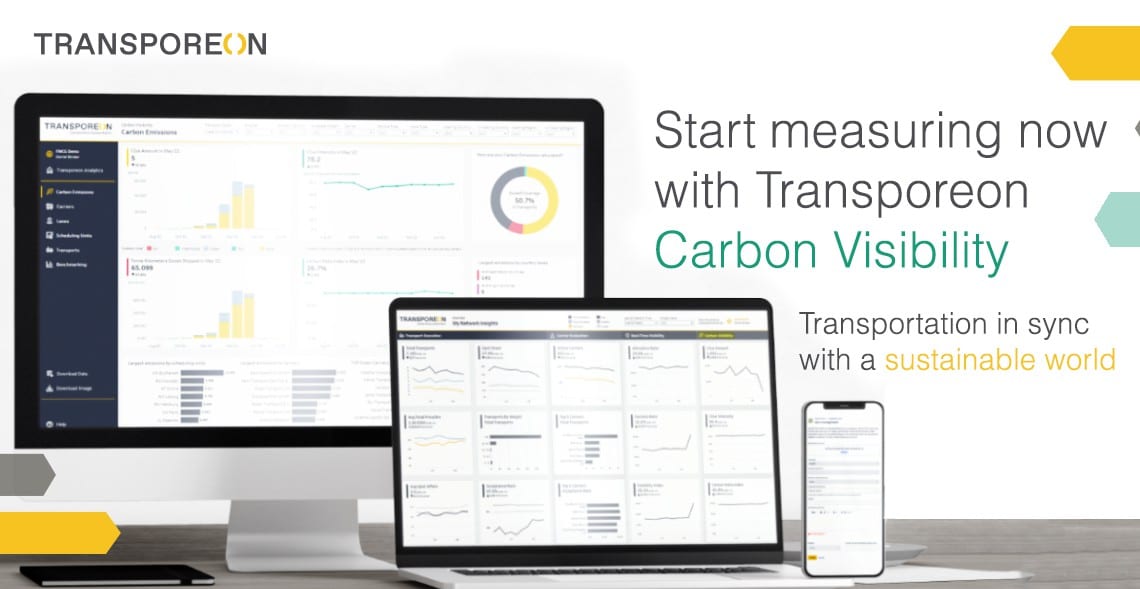
After the successful alpha and beta phases, Transporeon – Europe’s leading transport management platform – is rolling out its groundbreaking Carbon Visibility to all customers worldwide who use Transporeon for transport procurement. Through a platform update, Transporeon calculates greenhouse gas emissions for each transport according to the highest current standard.
(Ulm) Carbon Visibility users can also sort, analyze, and compare their emissions by freight forwarders, corridors, or business areas, thus optimizing them. Users can export the results of Carbon Visibility and use them in other systems. This provides them with the ideal tool to implement decarbonization strategies and greenhouse gas reduction targets.
Additionally, data from transports outside the Transporeon platform can be uploaded. Thus, Carbon Visibility users can calculate and manage all their transports worldwide: air freight, container shipping, rail, or truck transport.
The benefits of Transporeon’s Carbon Visibility Dashboard include:
- Holistic, 4-step approach: Measure, Benchmark, Reduce, and Report
- Calculations enhanced with real-time and primary data – making Transporeon the first provider of CO2 emissions calculation in logistics based on primary data at scale
- An interactive dashboard with all relevant results at a glance
- Automated, transparent measurement of Scope 3 emissions bottom-up, well-to-wheel, transport for transport, and compliant with the GLEC standard
“Accurate monitoring and reporting of emissions – along with the ability to manage future emissions – is crucial for a more sustainable supply chain. Digitalization is key to rapid progress towards climate-neutral logistics,” says Stephan Sieber, CEO of Transporeon. “Our customers need an overview of their global greenhouse gas emissions. With the new tool, we give all customers in our network the opportunity to make smarter and more environmentally friendly decisions based on better data.”
Photo: © Transporeon